Wednesday, February 13, 2013

カタカナの用例: Examples of Katakana Use in Modern Japanese


Use of Katakana in a manga: GINTAMA
Source: A Japanese roommate's wall decoration. Page number unknown.


Use of Katakana on food packaging
Source: Bottle of ごま (salad dressing), brand イカリ


Use of Katakana in Modern Haikus
Source: Internet Webpage "Contemporary Katakana Haiku" ("現代カタカナ俳句"), http://www.geocities.jp/gekkason/oka-negio-30.html

A few examples:
アニメソングクリスマスソングより迅し   河内静魚
夜桜の一太刀浴びぬカップ酒                       植野順聞
セ-タ-の背をセーターの胸で押す     原英俊
タンポポ咲くドレミドレミソミレドと    いのうえかつこ

ヒトもまた絶滅危惧種ほたるとぶ      川嶋隆史

A few categories:
Modern Japanese things (コンビニ, カップ酒)
Foreign words (アロハシャツ, アジト,キャンパス,クリスマス, ドーナツ)
The Sky (オリオン、コスモス)
Flowers/Plants (カンナ、クローバ、アネモネ)
Names (ゲーテ, スカイツリー (Sumida Tower, Tokyo))
"Sounds" (ドレミドレミソミレド)

A complete list of all the katakana in this page:

アイロン
アジト (den, hideout)
アトリエ
アネモネ
アロハシャツ (aloha shirt)
エプロン
オブジェ
オリオン
カタカナ
カップ
カンナ
キャベツ
キャンパス
キューピー
クリスマス
クローバ (clover)
ゲーテ (Goethe)
ゲリラ (guerilla)
コスモス
コップ (cup)
コンビニ
サーファー
サイレン
サングラス
ジーンズ
シャツ
シャワー
スカート
スカイツリー
スケート (skate)
セーター
タンポポ
ドレミドレミソミレド
チェロ
チューリップ
ドーナツ
トマト
ナイフとフォーク
バイク
ハイビスカス
バス
パン
ハンモック
ピアノ
ヒト
ヒロシマ
ブルース
ベンチ
ポインセチャ (poincettia)
ポケット
ポスト
ミモザ
ミルク
ムーンウォーク (moonwalk)
メーデー (Mayday, Labour Day)
メビウス
メロンパン
ラムネ
リズム

Use of Katakana on the cover of manga/anime magazines:
Source: Google Image. (Gファンタジー and 少年ガンガン)


Thursday, February 7, 2013

俳句、ハイク、haiku.

二月は一年で一番みじかい月なので、“俳句の月”になりました。“はいくの月” (英語で、National Haiku Writing Month, or NaHaiWriMo) と言うことは、毎日はいくを一つ書くことです。私は詩を書くのが好きだから、その“はいくの月”をします。今は英語で書きますが、いつか日本語ではいくを書きたいです。それは私の目標(goal)です。

はいくは何ですか?


             古池や 蛙飛び込む 水のおと
                       - 芭蕉
                 Ancient pond –
                 A frog leaps in
                 The sound of the water
                       - Basho

                         
・5−7−5
日本語で、はいくは5−7−5音節(syllable, mora)に書きます。でも、日本語の単語(word)はだいたい長いです。だから、日本語の5−7−5は英語の5−7−5より短いそうです。さいきん、英語のはいくは5−7−5じゃなくてもいいです。

・季語 (Kigo: Season Word)
はいくを書く時、季語が重大(important)です。季語がはる、なつ、あき、ふゆと関係(relation)がある単語です。季語はたくさんありますが、むずかしいです。For example, in Basho's famous poem, kawazu (蛙: the frog) is a season word for spring. How are you supposed to know this? わかりません。季語を探す(look for) 時、さいじきをよみます。さいじき(歳時記)は季語のじしょです。

・切れ字 (Kireji: Cutting Word)
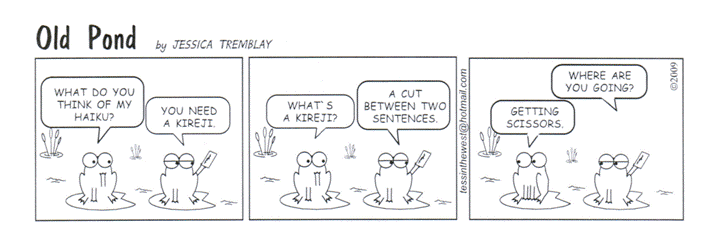
はいくだいたい切れ字があります。切れ字はむずかしすぎます。This is quite complicated, so I'd like to refer you to the Wikipedia page on this. However, the most important point for writing haiku in English is that there must be a a juxtaposition of two different images/topics – for example, the ancient pond, and the jumping frog (in this poem, the kireji is the particle や).

Found on Old Pond Comics –
where (frog) Kaeru learns to write haikus from (also frog) Master Kawaku.

リンクス:
NaHaiWriMo on Facebook: https://www.facebook.com/pages/NaHaiWriMo/108107262587697
Learn Haikus with Old Pond Comics (and two frogs): http://www.oldpondcomics.com/haiku.html
Online saishiki (one of many): http://etext.lib.virginia.edu/japanese/haiku/saijiki/brief.html


二月=にがつ (February – the second month)
一番=いちばん
短い=みじかい (to be short)
俳句=はいく
詩=し (poetry)
英語=えいご
目標=もくひょう (goal, target)
音節=おんせつ (syllable, mora
単語=たんご (vocabulary word)
長い=ながい (to be long)
重大=じゅうだい (important)
関係=かんけい (relation)
探す=さがす (to look for)

Wednesday, February 6, 2013

P.E. Goal and Activities Statement

It's been a while since I have practiced speaking Japanese, although in the past year I have continuously been exposed to it since a lot of my friends, both in Seoul and in Princeton, are Japanese or speak the language. I would say that although my listening skills have improved, my speaking skills have not, and in fact they have probably gone down.

Therefore, my goals for the first part of the semester are:
• To practice speaking a lot in order to get used to speaking Japanese again
• To be able to speak more naturally (without foreign-sounding pauses, using Japanese placeholders)
• To improve my intonation


I will try to do the following activities:
• Go to Japanese language table regularly
• Speak to a friend only in Japanese for at least twenty minutes once a week
• Take the P.E. exercises seriously and do more than the minimum exercises
• Do some singing shadowing (because doing karaoke for a class is pretty amazing, even though I don't really like recording my own voice)

Tuesday, February 5, 2013

もう一度始めましょう! JPN102

もう一度日本語の授業をとります。先生たちは去年と同じです。楽しみにしています。
^_^

今学期のクラスのブログは"ニコニコ日本語"です。かわいいブログですね〜


じゃ、新しいクラスメートへ
初めまして、三年生のアンクレーア・ワンです。フランスから来ました。両親は中国人です。(だから、私のブログにかんじをたくさんあります。かんじがある方が奇麗です。でも、授業で勉強していませんかんじをブログポスとのしたで書きます。)
私のせんこうはうウドローウィルソン(Woodrow Wilson)です。でも、そのより、言語を勉強するのが好きです。韓国語も勉強しています。そして、歌うのが大好きです。
よろしくおねがいします!日本語を面白くて楽しく勉強しましょう!


授業=じゅぎょう
去年=きょねん
同じ=おなじ (the same)
楽しみ=たのしみ
学期=がっき
両親=りょうしん
奇麗=きれい
勉強=べんきょう
言語=げんご (language)

Sunday, January 20, 2013

私を忘れないで

私のブログを読んでくれるのみなさまはどんな人ですか。知りたいです…

Bloggerの統計に依ると、ロシアと日本から読む人が一番たくさんいます。なぜロシアですか… ロシアで日本語を勉強したい人ですか。英語を勉強したい人ですか。他の理由がありますか。分からないです。

私の友達のなかで、このブログの存在を知っている人が、たぶん、三人しかいません。その三人で、ロシア人がいませんが、日本人一人います。一緒にいた時間がとても短かったけど、夢みたい幸せだった。だからその人が私のブログを覚えているか、気になります。


勉強していることが日本語だけではありません。人生についても勉強しています!皆様、一緒に頑張りましょう!